More than a bargain: the humble church op shop
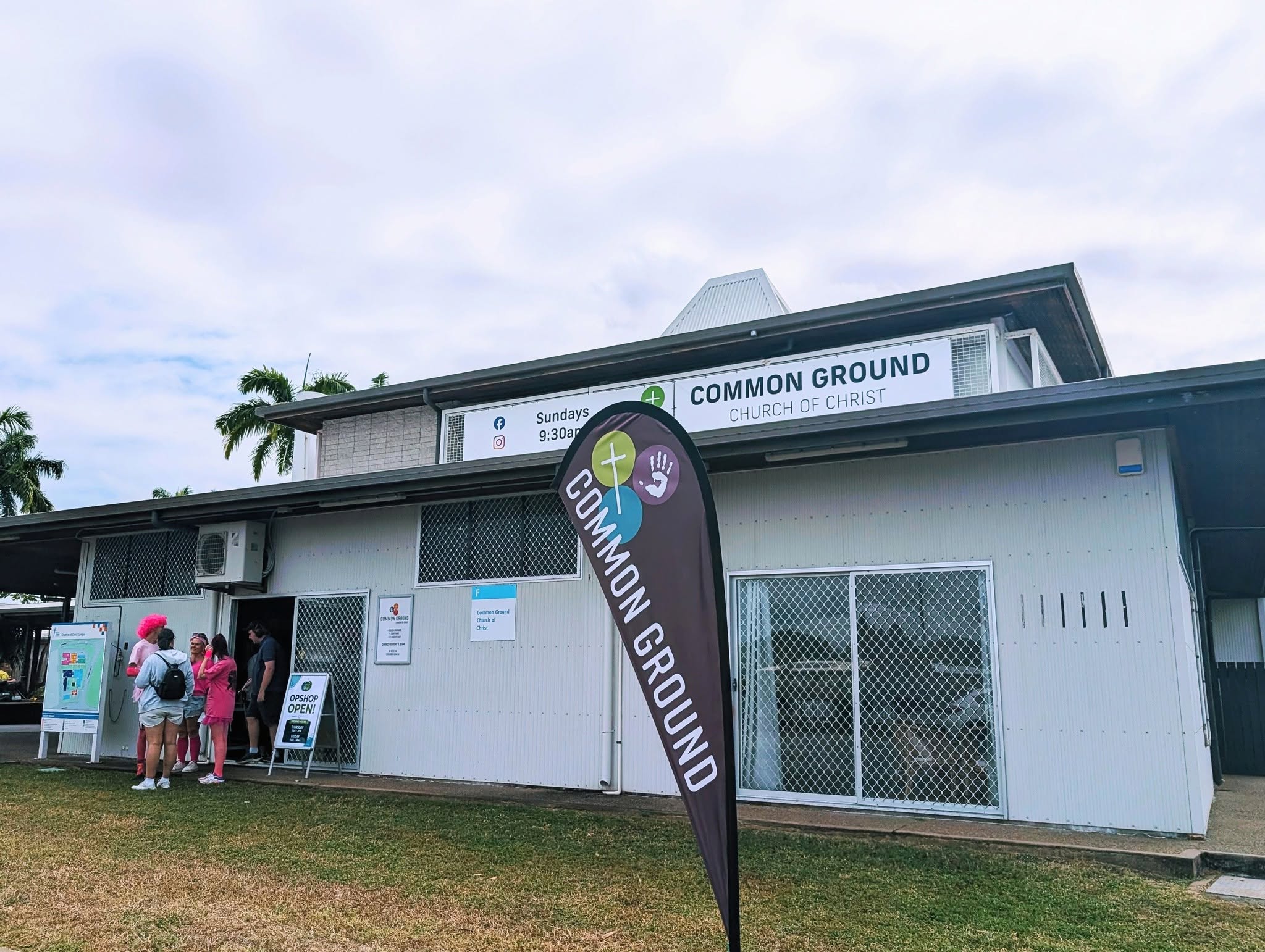
Photo: Common Threads Op shop on Facebook.
I’ve been looking into church op shops lately, starting with Common Threads here in Townsville. What began as a bit of local research has had me thinking about the different ways churches use what they have to help the people around them.
An op shop seems fairly straightforward. Somebody donates something they no longer need, a volunteer sorts it, and somebody else takes it home for a few dollars.
But there is quite a lot happening in that ordinary exchange. A useful item gets another life. A family can stretch its budget a little further. There is an opportunity for a conversation, and perhaps some money left to support another part of the church’s community work.
I’ve split these reflections into two parts. This first one is about affordability and connection. The second looks at how the money can help keep practical care going.
Starting close to home
The photograph above, shared by Common Threads Op shop, shows the Common Ground Church of Christ building with an op shop sign outside the entrance.
It is a simple picture, but I like what it invites us to consider. A church building can be a place people come to during an ordinary week, with an ordinary need, and find a welcome.
There is more I would like to learn about Common Threads, particularly how its pricing works and what the proceeds support. For now, it provides a local starting point for looking at what other churches are already doing across Queensland.
Also here in Townsville, Northreach Baptist Church has food relief in place, with an op shop run as part of that ministry.
When keeping the price low is part of the purpose
One example that caught my attention was the Churches of Christ op shop on Bribie Island.
In a June 2026 story about the shop, Churches of Christ described shirts selling for $3, shoes for $4 and a two-piece suit for $6. The prices were deliberately kept low to help the community.
That makes sense to me. If someone needs a shirt and has very little money to spare, being able to buy it for $3 is already a useful outcome. The help begins with the purchase itself.
The same story reported more than 600 visitors each week and 37 volunteers. Some customers stayed for a cup of tea, while others became volunteers themselves. A pay-it-forward jar helped cover purchases when someone was short at the till.
Those details give a better picture of the shop’s purpose than a sales total could on its own. People have somewhere to go, something useful to do and a reason to come back.
Room for a conversation
Stafford Heights Baptist Church describes a similar experience. Its thrift shop opened in 2004 to support the community and has become a place where locals find friendship as well as affordable goods.
I think there is something valuable in having a simple reason to walk through a door. Browsing a shelf or looking through a rack of clothes gives people something to do while a conversation begins. Nobody needs to arrive with a carefully prepared explanation of why they are there.
That sort of welcome takes people who are willing to give their time. Sorting donations, keeping the space tidy and being patient with a customer are all part of making it work.
It is easy to overlook those jobs when talking about ministry. Yet they are very practical ways of caring for someone.
Using what is already in our hands
This brings me back to something I have been reflecting on since church camp: how faith shapes what we do with the things already entrusted to us.
A church might have a room available during the week. Someone might have useful clothes sitting in a cupboard. Another person might have time to volunteer or experience in running a shop.
Put those things together thoughtfully, and there is an opportunity to make someone’s week a little easier.
For me, that is a good reason to pay attention to the humble church op shop. It gives ordinary things, and ordinary acts of service, a place in caring for our neighbours.
Continue with part two: How a few dollars at the op shop can help keep care going.